Picture Reconstruction Basics
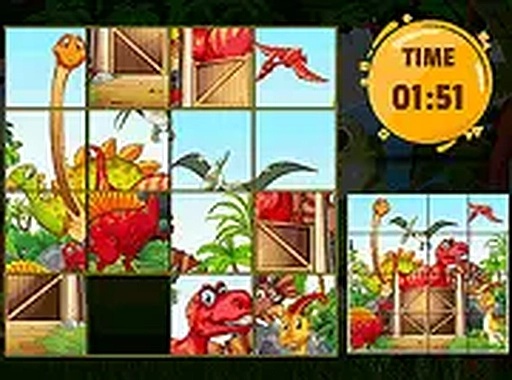
The central challenge involves a grid of square tiles that have been shuffled out of order. One tile position remains empty, allowing adjacent pieces to slide into the gap. A complete reference image sits beside the playing area, giving you a clear target to work toward. Each successful slide brings the picture one step closer to being whole again.
Pacing and Mental Engagement
Unlike many timed puzzles, this experience encourages thoughtful movement rather than rushed clicks. The absence of a countdown clock means you can plan each slide without stress. This design makes it particularly well-suited for short breaks or longer, meditative sessions where focus and pattern recognition take center stage.
Visual Theme and Appeal
The dinosaur theme adds a playful, prehistoric charm that appeals to younger players while remaining visually pleasant for adults. Each completed puzzle reveals a different dinosaur illustration, offering variety across multiple playthroughs. The clean interface keeps distractions minimal, letting you concentrate on the task at hand.
Cross-Platform Accessibility
Because the game runs entirely within a web browser, there is no software to install or update. It works smoothly on both desktop computers and mobile devices, adapting to different screen sizes. A full-screen option is available for those who prefer a larger view, though the standard layout already provides a comfortable experience.
Skill Development Through Play
Regular engagement with this type of puzzle can strengthen spatial reasoning and short-term memory. The process of comparing the scrambled layout to the reference image trains the eye to spot small differences. Over time, players often develop faster strategies for grouping tiles and completing sections efficiently.
Replay Value and Accessibility
There are no restrictions on how many times you can attempt a puzzle. Each session offers the same core challenge, but the shuffled arrangement changes, ensuring no two games feel identical. The lack of advertisements or inappropriate content makes it a safe choice for unsupervised play by children.
✅ Compatibility & Testing
• Desktop (Windows 11, macOS Ventura)
• Mobile (iPhone 14, Samsung Galaxy S23)
• Tablet (iPad Pro, Android tablet)
✅Supported browsers: Chrome, Safari, Edge, Firefox (latest versions)
❌ Not supported: Internet Explorer, older browser versions





Player Comments
Sign in to comment
You must be logged in before posting a review or rating.
No account? Create one
No comments yet. Be the first to comment!