Core Matching Mechanics
Players begin with a grid of face-down tiles. Each tile hides a unique illustration. The goal is to flip two tiles per turn and find identical pairs. When a match is found, the tiles remain face-up. Non-matching tiles flip back, challenging the player to recall their locations. This straightforward loop forms the foundation of the experience. The game rewards patience and observation rather than speed, making it accessible to newcomers. Over multiple rounds, players naturally improve their ability to remember visual patterns. The lack of complex rules means anyone can start playing immediately without reading lengthy instructions.
Visual Style and Atmosphere
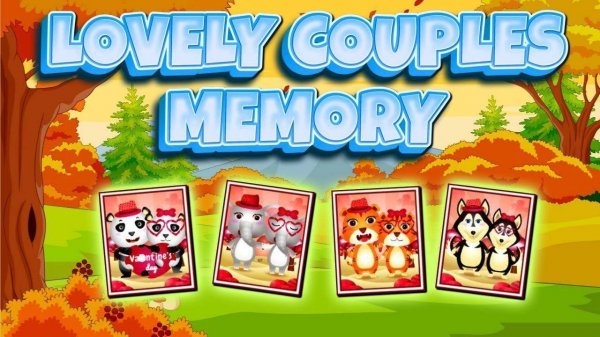
The illustrations use bright, friendly colors that create a welcoming environment. Images are designed to be easily distinguishable, helping players build mental maps of the board. The overall aesthetic avoids clutter, keeping the focus on the tiles themselves. This clean visual approach reduces distractions and supports the calming nature of the activity. The theme stays positive and inclusive, with no dark or intense imagery. Such design choices make the game suitable for children, adults, and seniors alike. The peaceful presentation encourages longer play sessions without causing fatigue.
Progression and Difficulty Curve
Later boards may introduce larger grids or more similar-looking images, gradually increasing the challenge. This gentle ramp allows players to build confidence before facing harder layouts. The game does not punish mistakes harshly, as failed attempts simply reset the tiles. This low-stakes environment promotes learning through repetition. Some versions might include a move counter or timer for those who enjoy tracking their improvement. However, the primary focus remains on relaxed play rather than competition. Players can choose to ignore optional metrics and simply enjoy the process.
Social and Solo Play Options
While the game works well as a solitary pastime, it also supports cooperative play. Two players can take turns flipping tiles, working together to clear the board. This shared activity encourages communication and joint strategy. For solo players, the game offers a quiet way to unwind while keeping the mind active. The flexible design means it fits into short breaks or longer relaxation sessions. Whether played alone or with a partner, the experience remains consistent and enjoyable. The lack of time pressure makes it ideal for casual gaming sessions.
Accessibility and Controls
Interactions require only simple taps or clicks, making the game playable on various devices. The interface uses large, clearly marked tiles that are easy to select. No complex gestures or multi-step commands are needed. This simplicity ensures that players with limited gaming experience can participate fully. The font and icon sizes are generous, aiding readability on smaller screens. Sound effects, if present, are subtle and non-intrusive. Overall, the design prioritizes ease of use so that the focus remains on the puzzle itself.
Compatibility
💻 Desktop | 📱 Mobile | 📟 Tablet
– All supported · Best with Chrome or Safari





Player Comments
Sign in to comment
You must be logged in before posting a review or rating.
No account? Create one
No comments yet. Be the first to comment!